If you have ever walked through Seaside and thought, this place feels different, you are not imagining it. The town was planned to work differently from a typical beach community, with homes, shops, gathering spaces, and beach access arranged for daily life on foot. When you understand New Urbanism in Seaside, you can better see how it shapes your routines, your home experience, and even what ownership feels like here. Let’s dive in.
New Urbanism in Seaside, Explained
New Urbanism is a planning approach built around walkable streets, mixed uses, public gathering spaces, and buildings that respond to local history, climate, and landscape. Instead of spreading homes, shops, and civic spaces far apart, it brings them together in a connected neighborhood pattern.
Seaside is widely regarded as the first fully realized New Urbanist community. Construction began in 1981 under Robert and Daryl Davis, with a plan by Andrés Duany and Elizabeth Plater-Zyberk. Located in Walton County along Scenic Highway 30A, Seaside became a model for a compact, walkable resort town that pushed back against conventional suburban development.
Harvard’s case study describes Seaside as a mixed-use resort town where civic buildings, restaurants, shops, housing, and public space are arranged as one neighborhood fabric. That planning choice helps explain why Seaside feels cohesive before you even focus on individual homes.
How Seaside Changes Daily Movement
One of the biggest differences in Seaside is how you get around. The town describes narrow, brick-paved roads and white-sand footpaths that connect cottages to the town center, with shopping and dining within a five-minute walk of residences.
For you as a homeowner, second-home owner, or visitor, that means many daily trips can happen without getting in the car. Coffee, dinner, errands, beach access, and green spaces sit close together, so movement feels simple and connected.
Walkability Is Built Into the Plan
Seaside is not just a place that happens to be walkable. It was planned that way from the start. Harvard notes that the town follows a radial street plan centered on a mixed-use Town Square, where homes, restaurants, shops, and civic spaces are woven together rather than separated into single-use areas.
That layout changes your pace of life. Instead of driving from one destination to another, you are more likely to move through town gradually, seeing people, stopping in shared spaces, and interacting with the setting around you.
Beach Access Feels Like Part of Town
In many coastal areas, the beach can feel like a separate destination that requires planning, parking, and a car trip. In Seaside, beach access is part of the circulation pattern itself.
The Congress for the New Urbanism notes that each street leading to the beach ends at a community pavilion. Harvard also notes that public pathways and dune crossovers preserve access to the shoreline. That means the beach is woven into everyday life, not treated as a disconnected outing.
Parking Supports a Pedestrian Lifestyle
Seaside also manages parking in a way that reinforces its design. The town’s current parking program includes designated parking and a complimentary shuttle that runs daily from 6 a.m. to midnight, dropping riders in the heart of town.
That system reflects an important reality about life here. Once you arrive, the town is designed for walking and shared mobility more than repeated short car trips.
How Design Shapes Social Life
New Urbanism is not only about streets and buildings. It is also about how design can support connection. In Seaside, many of the town’s best-known features encourage casual interaction and shared experiences.
That does not mean every moment is social. It means the physical layout gives you more opportunities to see neighbors, gather in common spaces, and feel part of a living town rather than a row of isolated homes.
Front Porches Have a Purpose
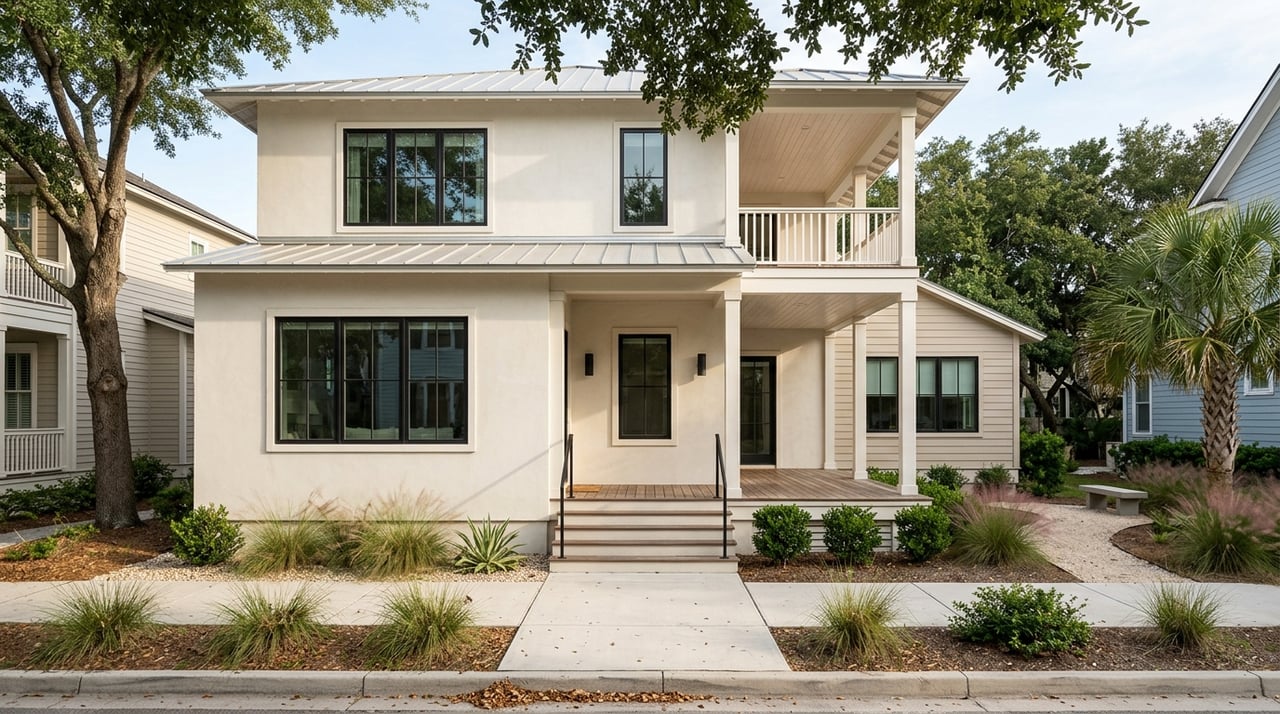
In Seaside, front porches are more than a style choice. The town’s guide explains that homes use front porches, small lots, and a form-based code that allows variety while requiring certain defining elements such as porches, wood siding, or metal roofs.
The result is a semi-public threshold between home and street. That kind of design can make conversation and casual contact feel more natural, because the home engages with the public realm instead of turning away from it.
Shared Spaces Replace Large Private Lawns
Seaside uses public and semi-public spaces in place of the large private yards common in many subdivisions. Central Square includes the amphitheater, Lyceum Lawn supports school and weekend events, and Ruskin Place and the beach pavilions also serve as gathering areas.
This shifts social life outward. Rather than putting most outdoor activity behind private property lines, the town creates shared spaces where residents and guests can spend time in a more collective setting.
Events Keep the Town Active
Seaside’s social calendar is closely tied to its physical layout. The amphitheater hosts concerts, movies, and theater performances, and the town highlights regular stories, news, events, and annual celebrations such as its Independence Day block party.
For you, that can make the town feel lively beyond the busiest beach weeks. Even outside peak season, programmed public spaces can create a stronger sense of rhythm and activity.
Why Seaside Feels So Cohesive
One reason Seaside stands out is that it feels unified without feeling identical. That balance comes from its form-based code, which allows architectural variety while maintaining a recognizable visual language.
Seaside’s own materials note that homeowners can vary design within a framework that preserves key elements. In practical terms, that means your home is part of a larger composition, which can make the whole town feel curated rather than random.
Architecture Works With the Town Plan
The architecture in Seaside is part of the New Urbanist idea, not just decoration layered on top. Buildings, porches, streets, pavilions, and public spaces all work together to create a consistent experience.
That consistency often shapes how ownership feels. Instead of owning a home in a conventional subdivision, you are living within a carefully designed small-town pattern where the public realm plays a larger role.
The Natural Setting Still Matters
Seaside’s plan also preserved the coastal landscape rather than flattening it into a standard resort layout. Harvard notes that the dunes and natural beach system were preserved, and Seaside says the town uses native plants while limiting irrigation and turf.
That approach helps the town feel connected to its environment. The landscape is not treated as an afterthought. It is part of what gives Seaside its character.
What This Means for Buyers
If you are considering a home in Seaside, New Urbanism matters because it affects convenience, privacy, movement, and the overall ownership experience. You are not just choosing a house. You are choosing a town pattern and a lifestyle.
For many buyers and second-home owners, the appeal is clear. Coffee, shopping, dining, beach access, and events are close together, so even a short visit can feel easy and full. That can be especially appealing if you want a second home that works well without a lot of planning.
The Benefits You May Notice Most
A Seaside property can offer lifestyle advantages that come directly from the town’s design, including:
- Easy walking access to dining, shopping, and public spaces
- Beach access that is integrated into the street network
- A stronger sense of place through cohesive architecture and planning
- Shared gathering spaces that support community activity
- A town center that stays active across more hours of the day
For buyers who value convenience and a connected coastal setting, those features can be a major draw.
The Tradeoffs to Understand
At the same time, Seaside is not designed around maximum separation from the public realm. Harvard’s case study notes that critics have associated Seaside with exclusivity and high property values, and the town’s parking controls show that peak-season convenience depends on shared systems rather than unlimited curb space.
That means your experience here may feel less private than in a more conventional coastal neighborhood. For some buyers, that is part of the charm. For others, it is an important factor to weigh before making a decision.
What New Urbanism Means for Life in Seaside
The simplest way to think about Seaside is this: it feels more like living in a carefully edited small town than owning a home in a typical beach subdivision. That feeling comes from the same core features over and over again, including walkable streets, mixed uses, front porches, public green spaces, and beach pavilions.
If those design choices match how you want to live, Seaside can offer a very distinct ownership experience along 30A. And if you are comparing Seaside with other Emerald Coast communities, understanding this planning model can help you make a more confident decision.
When you want local guidance on Seaside, 30A lifestyle homes, or coastal investment opportunities, connect with Albert Baeza for experienced, hands-on support.
FAQs
What does New Urbanism mean in Seaside, Florida?
- In Seaside, New Urbanism means the town was planned around walkability, mixed uses, shared public spaces, beach access, and architecture that works as part of a connected neighborhood.
How does Seaside’s layout affect daily life for homeowners?
- Seaside’s layout makes it easier to walk to shops, dining, green spaces, and the beach, which can reduce the need for short car trips and create a more connected daily routine.
Why do front porches matter in Seaside homes?
- Front porches help create a transition between the home and the street, which can encourage casual interaction and support the town’s social, walkable design.
Are Seaside beach access points part of the town plan?
- Yes. Streets leading toward the shoreline end in community pavilions, and public pathways and dune crossovers help preserve access to the beach.
What should buyers know about owning property in Seaside?
- Buyers should understand that Seaside offers strong convenience and a distinct sense of place, but it also relies on shared public systems and may feel less private than a conventional coastal neighborhood.