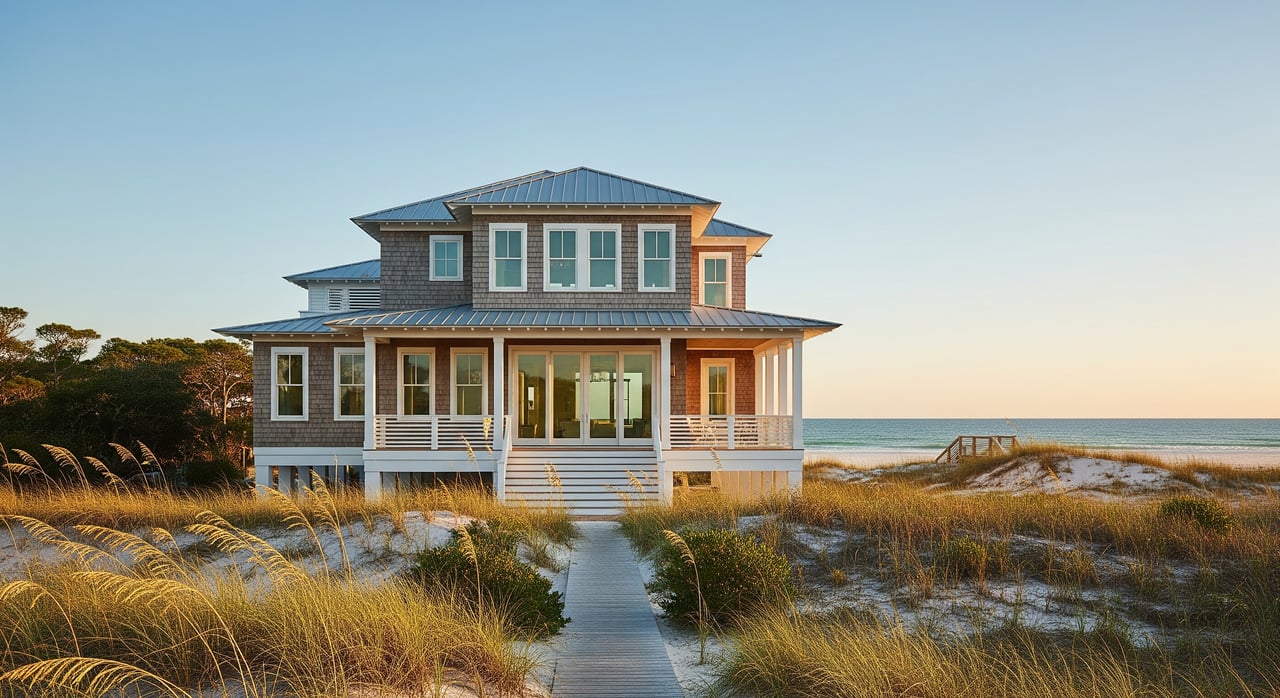
Dreaming of a custom beach house near 30A but not sure where to start with a vacant lot in Santa Rosa Beach? You are not alone. Buying dirt on the Emerald Coast comes with unique coastal rules, flood zones, and design decisions that can shape your budget and timeline. In this guide, you will learn how to evaluate lots, plan for permits, budget for site work, and avoid common pitfalls so you can move forward with confidence. Let’s dive in.
Lot types in Santa Rosa Beach
Santa Rosa Beach sits along Walton County’s 30A corridor with a mix of gulf‑front, near‑beach, lake and canal, wooded, and infill neighborhood parcels. Each lot type carries different rules and cost drivers.
Gulf-front and dune-front
These lots offer direct beach access and the highest premiums. You can expect strict coastal construction rules, dune protection requirements, sea turtle protections, and elevated foundation designs. Design and permitting typically take longer.
Near-beach and walkable inland
You get close access to the sand with fewer direct coastal restrictions than gulf‑front parcels. You still need to plan for flood zones, storm surge risk, and possible neighborhood covenants or architectural review.
Wooded and inland
These lots often sit at lower price points with lower immediate flood exposure. Budget for tree removal, clearing permits, and potential wetlands review before you finalize plans.
Canal or lakefront
Water views add value, but you will want to verify easements, riparian rights, and flood considerations. Double‑check access and any limitations on docks or shoreline work.
Infill in established neighborhoods
In subdivisions or resort communities, plan for HOA covenants and architectural review board guidelines. Utilities may already be available, which can simplify hookups and shorten timelines.
Match your goals to the right lot
- If you are focused on vacation rental income, prioritize proximity to the beach, rental‑friendly covenants, parking, and utility capacity. Confirm short‑term rental licensing and neighborhood rules early.
- If you want a quiet second home, an inland or wooded lot may reduce insurance costs and coastal constraints.
- If you are building to a budget or developing multiple homes, put buildability first. Elevation, soil conditions, utilities, setbacks, and ARB rules will drive your pro forma.
Rules and permits to check early
Coastal building touches federal, state, regional, and county layers. A quick upfront review can save months later.
Flood zones and elevation
Many coastal lots fall in FEMA flood zones like A, AE, or V. V zones usually require elevated foundations on piles or piers. Your finished floor elevation must meet or exceed the Base Flood Elevation. An elevation certificate is often needed for both design and insurance.
Coastal Construction Control Line and dunes
Gulf‑front and dune‑front parcels may sit near or within areas that require state coastal permits. Expect limits on building seaward of dunes and possible mitigation or dune protection measures.
Wetlands, wildlife, and lighting
Wetlands can limit the buildable footprint and trigger additional permits. For gulf‑facing sites, sea turtle nesting season, generally May through October, influences allowable lighting and can affect construction windows.
County zoning, HOA, and STR rules
Walton County’s Land Development Code sets zoning, setbacks, height, and stormwater standards. Many 30A neighborhoods enforce ARB guidelines and recorded covenants. Walton County also regulates short‑term rentals, and some neighborhoods add further restrictions or bans. Verify both layers.
Typical approvals before you build
- Walton County building permit with plans by licensed design professionals
- Sewer connection or septic approval, depending on utility availability
- Grading and stormwater approvals, including erosion control
- Coastal permits if the lot is near the beach or within controlled zones
- Driveway or access permits for county roads, plus utility tap approvals
- HOA or ARB design approval if applicable
- Environmental permits when wetlands are present
Site evaluation and budget basics
Your site drives your budget. Understand these variables before you finalize design.
What drives cost and schedule
- Elevation and flood zone influence foundation type and height requirements
- Soil conditions determine whether you need borings and specialized foundations
- Utility availability shapes hookup costs and timelines
- Access and driveway work add curb cut permits and paving expenses
- Vegetation removal and protected trees can add permitting and mitigation
- Wetlands and stormwater requirements may reduce buildable area and add design costs
- Setbacks and easements shrink the buildable envelope and affect design
- ARB or design standards may require specific materials or roof forms
- Coastal mitigation, such as dune restoration or sand fencing, may be required
Line items to price out
- Lot price and closing costs
- Boundary and topographic survey, plus ALTA if required
- Soil borings and a geotechnical report
- Clearing, grading, fill, and erosion control
- Foundation system, from slab to raised piles for coastal sites
- Driveway, parking, and curb cut work
- Utility taps and connections or septic installation
- Stormwater systems and associated permits
- ARB or HOA fees or deposits
- County permitting and impact fees
- Architectural, structural, and coastal engineering fees
- Contingency, commonly 5 to 15 percent depending on risk
- Inspections, testing, and an elevation certificate
- Landscaping and erosion protection, including dune planting where required
- Builder’s risk during construction, plus flood and wind policies after completion
- Long lead items like impact‑rated windows, doors, and specialty materials
Foundation and structural choices
Coastal homes, especially in V zones, often use deep foundations such as driven or helical piles. Elevated floor systems can increase upfront cost but may reduce future flood insurance. Wind design follows Florida Building Code, including impact protection for openings and reinforced roof connections.
Timelines and common delays
Permitting can range from days to weeks for simple builds to several months for coastal or septic approvals. HOA or ARB reviews add cycles. Custom homes often take 6 to 12 months to build, with elevated coastal projects at the longer end. Utility extensions can add months. Seasonal factors, including sea turtle protections and hurricane season, may influence scheduling.
Insurance and financing
If your lot is in a special flood hazard area, lenders typically require flood insurance. Your finished floor elevation relative to BFE will influence premiums. Wind coverage and underwriting can vary in coastal zones, and some insurers require mitigation measures or higher deductibles. If you need a construction loan, confirm lender expectations for foundation type and local builder experience.
Smart due diligence steps
A strong due diligence plan gives you clarity on buildability, cost, and risk before you release contingencies.
Documents to gather
- Recorded plat, legal description, and any easements or covenants
- Current boundary and topographic survey, or a survey contingency in your contract
- Flood zone map panel and any prior elevation certificate
- Walton County zoning designation and setback standards
- Applicable Walton County Land Development Code provisions, such as height or lot coverage
- HOA covenants and ARB design guidelines, if relevant
- Written utility availability and tap fee details
- Septic feasibility or sewer confirmation
- Wetlands or environmental survey if the site shows wet soils or surface water
- Geotechnical borings and a soils report
- Title report and any exceptions to review
- County permit fees, impact fees, and expected review timelines
- Short‑term rental requirements and any neighborhood restrictions
- Sea turtle and lighting ordinances for gulf‑facing sites
Questions for your agent
- What zoning applies and what is the buildable envelope once setbacks and easements are applied?
- Are there recent surveys, elevation certificates, or any record of fill on the lot?
- What comparable lot sales support the price for this location and lot type?
- Which utility providers serve the parcel, and do they have available capacity?
- Do HOA documents restrict rentals or set construction time limits?
- Are there known coastal erosion trends or planned beach projects nearby?
- Which local architects and builders are active with similar homes?
- What are realistic permitting timelines for this part of Walton County?
Questions for your builder or designer
- Which foundation type do you expect here, and what is the budget range for it?
- What drives per‑square‑foot costs for comparable custom homes in Santa Rosa Beach?
- Can you coordinate geotechnical borings, surveys, and permit submissions?
- What is your end‑to‑end schedule and key milestones?
- How do you handle sea turtle season compliance and lighting during construction?
- What contingency percentage do you recommend for this site and why?
- Do you use subcontractors with coastal piling experience?
- How will you meet county stormwater standards for this lot?
Contract contingencies to include
- Survey, flood determination, and acceptable elevation findings
- Septic feasibility, if sewer is not available
- Geotechnical report acceptable to buyer and lender
- HOA or ARB approval where applicable
- Defined timelines for document delivery and due diligence completion
- Right to renegotiate or cancel if elevation or foundation requirements materially impact budget
- Title insurance with remedies for encroachments or easements
Red flags to avoid
- No sewer and insufficient area for a compliant septic system
- Entirely or mostly in a V zone without prior elevation or mitigation planning
- Covenants that prohibit short‑term rentals when rental income is part of your plan
- Wetlands that consume the buildable footprint
- Major drainage or utility easements that bisect the lot
- No nearby utilities or costly main extensions
- Outdated or missing surveys and unresolved title exceptions
Next steps in Santa Rosa Beach
- Ask your agent for the current survey or plat, zoning, and utility confirmations.
- Order a flood zone determination and plan for an elevation certificate to fine‑tune design and insurance.
- Confirm sewer access or complete a septic feasibility review. Schedule geotechnical borings early.
- Secure HOA and ARB documents to confirm design and rental rules.
- Get preliminary estimates from two to three local builders plus a geotechnical firm, then set a site‑specific contingency.
- Write protective contingencies into your contract and plan your permit timeline around seasonal factors.
You do not have to navigate this alone. If you want a senior‑agent partner who understands coastal rules, lot valuation, and new construction consulting, reach out to Albert Baeza for boutique guidance backed by RE/MAX reach.
FAQs
What should I check first when buying a vacant lot in Santa Rosa Beach?
- Start with zoning, setbacks, flood zone and BFE, utility availability, HOA or ARB rules, and any wetland indicators so you can confirm buildability and budget.
How do flood zones affect my build and insurance?
- Flood zones determine your required finished floor elevation and often your foundation type, which then influences flood insurance eligibility and premiums.
Do I need special permits for gulf-front lots?
- Yes, gulf‑front and dune‑front parcels often require state coastal permits, dune protection measures, and compliance with sea turtle lighting and construction timing rules.
How long does it take to build a custom home here?
- Many custom builds take 6 to 12 months after permits, with coastal elevated homes often toward the longer end due to foundations and coastal compliance.
What if there is no sewer available to my lot?
- You will need septic feasibility approval. If the lot cannot support a compliant septic system, that is a major constraint and may be a deal breaker.
Can I use my home for short-term rentals in Walton County?
- Walton County regulates short‑term rentals, and some neighborhoods add further restrictions or bans. Verify both county licensing and HOA rules before you buy.