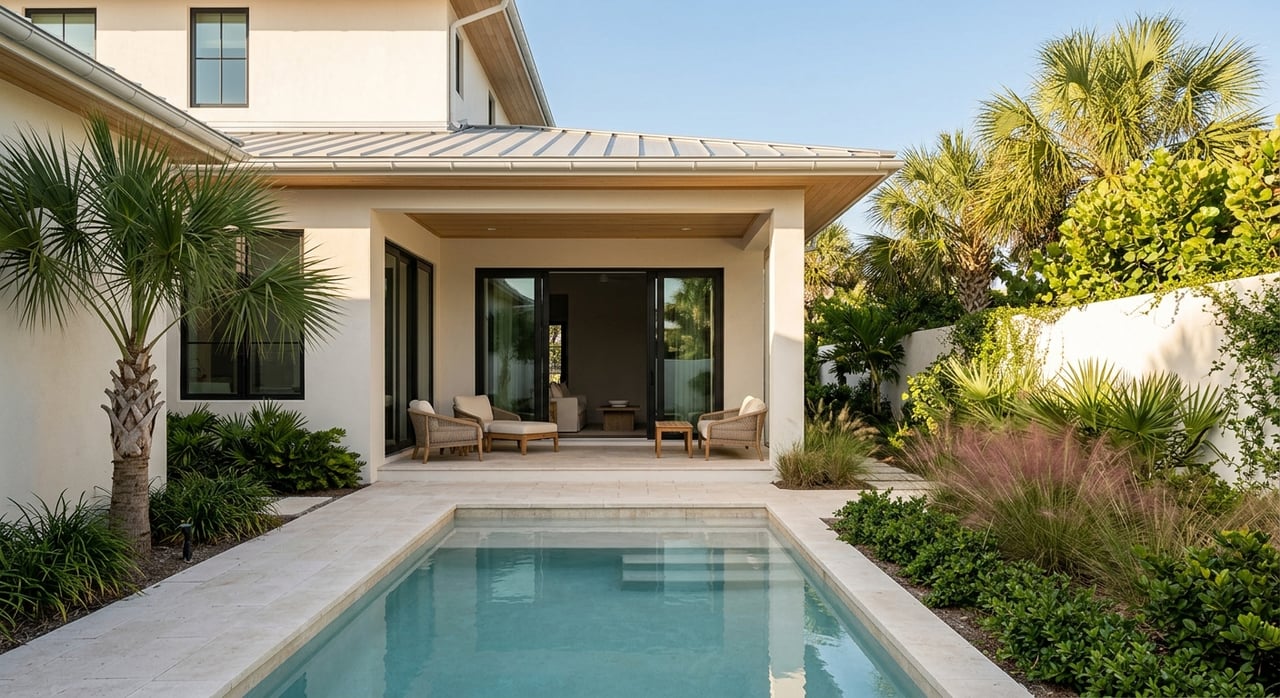
Wondering whether a Seacrest Beach home can do more than give you a place to escape? If you are considering a second home or investment property along 30A, short-term rental potential is often a big part of the decision. The good news is that Seacrest Beach has several traits that support vacation demand, but strong performance depends on far more than just owning in the right ZIP code. In this guide, you will learn how to evaluate short-term rental potential in Seacrest Beach with a practical, data-backed lens. Let’s dive in.
Why Seacrest Beach Gets Attention
Seacrest Beach is a distinctive 30A community with features that naturally appeal to vacation renters. According to the Seacrest Beach HOA, the neighborhood offers deeded beach access, a 12,000-square-foot lagoon pool, seasonal tram service, and more than 1.35 miles of walking trails. The community also sits between Rosemary Beach and Alys Beach, which adds to its appeal for guests who want walkable access to nearby dining, shopping, and coastal activities.
Those amenities matter because Walton County is a tourism-driven market. The county reported more than 5.1 million visitors and over $4.7 billion in visitor spending in 2023, and in 2024 the tourism department said the area generated almost $5 billion in economic impact. For you as a buyer or investor, that means Seacrest Beach benefits from being part of a very active destination market, not an isolated rental pocket.
Start With Demand, Not Hype
A property can be beautiful and still underperform if demand is misunderstood. In Walton County’s Spring 2024 Visitor Tracking Report, 95% of visitors said they went to the beach, 92% visited restaurants, 74% went shopping, and 55% reported biking or running. That tells you guests are choosing this area for easy beach access, convenience, and an active but relaxed coastal stay.
The same report showed that 94% of visitors intend to return, nearly two-thirds plan trips at least three months in advance, and 52% used a vacation-rental website to plan their trip. That is a strong signal that presentation, booking strategy, and amenity quality all affect performance. In Seacrest Beach, short-term rental success is not just about ownership. It is about how well the home fits the way guests actually travel.
Understand Seasonality Before You Buy
One of the biggest mistakes buyers make is underwriting a beach home like it will produce even income every month. Walton County’s Summer 2024 Visitor Tracking Study reported occupancy at 68.1%, average daily rate at $504.21, and RevPAR at $343.37 during peak season. Those are healthy numbers, but they also reflect a seasonal market.
Third-party data from AirROI’s Seacrest Beach market report estimates July as the strongest month and January as the weakest. The same report estimates average occupancy at 43.4%, average nightly rate around $626, and annual revenue around $78,851 across roughly 357 active listings. Since this is third-party data, it is best used as a comparison point rather than a final answer, but it reinforces the same takeaway: model Seacrest Beach as a seasonal destination.
What Types of Homes Fit This Market Best
The data points to a clear guest profile. Seacrest Beach attracts beach-oriented travelers, many of whom are coming with family or small groups. That usually favors homes that support longer beach days, easier arrivals, and shared living rather than smaller units built around style alone.
AirROI reports that 69.2% of Seacrest Beach listings have 3 or more bedrooms, and 79.0% accommodate 6 or more guests. That suggests the local short-term rental market is heavily shaped by entire-home inventory sized for groups. If you are comparing options, a home with enough bedrooms, bathrooms, parking, and practical living space may align better with demand than a smaller property with fewer functional advantages.
Amenities That Can Improve Rental Appeal
In Seacrest Beach, guests often expect more than a nice interior. They are choosing a destination built around beach access, pool time, dining, and convenience. That means the home itself should help make those experiences easy.
Features worth evaluating include:
- Proximity to the lagoon pool
- Ease of access to the beach and tram
- Sufficient parking
- Outdoor living space
- Durable, low-maintenance furnishings
- Enough bathrooms for the sleeping capacity
- Clear storage and layout for beach gear
- Reliable Wi-Fi and climate control
AirROI also highlights common listing amenities such as air conditioning, Wi-Fi, TV, smoke alarms, coffee makers, microwaves, heating, free parking, and pool access. In other words, the basics still matter. In a competitive market, convenience and functionality often do as much work as design.
HOA Rules Matter More Than Buyers Expect
One of the most important parts of evaluating short-term rental potential in Seacrest Beach is understanding how community operations affect guests. According to the Seacrest Beach community rules, wristbands are required for guests age 8 and older to access the lagoon pool, private beach access, and tram service. The same rules prohibit golf carts and similar motorized vehicles.
Beach access rules also prohibit wheeled traffic, pets, and leaving items behind on the beach or boardwalk. These details may seem small during a showing, but they can shape the guest experience in a major way. If a property relies on smooth arrivals and amenity access to justify its nightly rate, then guest instructions, check-in logistics, and rule compliance become part of the investment picture.
Licensing and Registration to Verify Early
If you are seriously considering a Seacrest Beach purchase for short-term use, verify compliance requirements before you get too far down the road. Florida’s Department of Business and Professional Regulation states that a vacation-rental license is required when an entire unit is rented more than three times in a calendar year for stays under 30 days, or when it is advertised as regularly rented to guests.
Walton County also requires annual short-term vacation rental registration. According to the county’s short-term vacation rental certification page, the fee is currently $300 per property for individual registration or $227 per property for community registration. The county also requires a local responsible party who is available 24/7, can respond within one hour, and monitors the property at least weekly.
These are not small details. They affect operating costs, management planning, and how hands-on you will need to be if you live out of market.
Taxes to Include in Your Underwriting
Revenue is only one side of the equation. You also need to account for taxes that apply to transient rentals. Florida imposes a 6% state sales tax on transient rentals, plus any applicable discretionary surtax. The research provided for this article notes Walton County’s discretionary sales surtax is 1%, and Seacrest Beach falls within the South Walton tourist development tax district, where the tourist development tax rate is 5% on rent plus required non-refundable fees.
Put together, those taxes can have a meaningful impact on your pro forma. If you are comparing properties, make sure your underwriting includes these costs rather than relying on gross revenue estimates alone.
How to Benchmark a Specific Home
The best way to evaluate short-term rental potential is to test one property against the market instead of relying on broad averages. Public benchmarking works best when you compare homes with similar bedroom count, guest capacity, parking, outdoor space, and location within the community. In Seacrest Beach, distance to the pool, beach access, and walkable amenities can all affect guest appeal.
A practical comp review should look at:
- Nightly rate by season
- Occupancy trends
- RevPAR
- Cleaning fees
- Minimum stay requirements
- Review scores
- Number and quality of listing photos
- Amenity match
- Booking lead time
- Whether the home competes as an entire-house rental
AirROI reports an average of 49.6 photos per listing and says 41.5% of listings show exact location. That does not prove better outcomes by itself, but it does suggest competing listings are often detailed and transparent. If a home you are evaluating would need stronger photos, clearer positioning, or better management to compete, that should be reflected in your analysis.
A Smart, Conservative Way to View Seacrest
Based on the available data, Seacrest Beach appears best suited to buyers who want a family-sized, amenity-rich beach home in a destination with proven tourism demand. The strongest fit is usually a well-located property that is easy to use, easy to explain to guests, and fully aligned with local and community rules. The combination of beach access, the lagoon pool, walkability, and strong county tourism numbers gives the area real short-term rental appeal.
At the same time, this is not a market where you should buy based on headline revenue alone. Seasonality, compliance, taxes, guest logistics, and competition all matter. If you are buying from out of town or planning a 1031 exchange, careful property-level analysis can help you avoid expensive assumptions.
If you want help evaluating Seacrest Beach homes through both a lifestyle and investment lens, Albert Baeza offers direct, hands-on guidance for buyers along 30A and the Emerald Coast.
FAQs
What makes Seacrest Beach attractive for short-term rentals?
- Seacrest Beach offers deeded beach access, a large lagoon pool, seasonal tram service, walking trails, and a location between Rosemary Beach and Alys Beach, all of which can support vacation-rental demand.
What should you look for in a Seacrest Beach short-term rental property?
- You should focus on bedroom count, guest capacity, parking, proximity to the pool and beach access, outdoor space, functional layout, and how well the home matches guest expectations for group travel.
Are short-term rentals in Seacrest Beach seasonal?
- Yes. County tourism reports and third-party market data both point to stronger summer performance and slower winter demand, so underwriting should reflect seasonal income swings.
Do Seacrest Beach short-term rentals require licenses and registration?
- Yes. Florida may require a vacation-rental license, and Walton County requires annual short-term vacation rental registration along with a local responsible party who can respond quickly.
What taxes apply to short-term rentals in Seacrest Beach?
- Short-term stays generally need to account for Florida state sales tax, Walton County discretionary surtax, and the South Walton tourist development tax.
How can you evaluate a specific Seacrest Beach home for rental potential?
- The most reliable approach is to compare the home against similar active listings and public market data using factors like nightly rate, occupancy, fees, review quality, amenities, and location within the community.