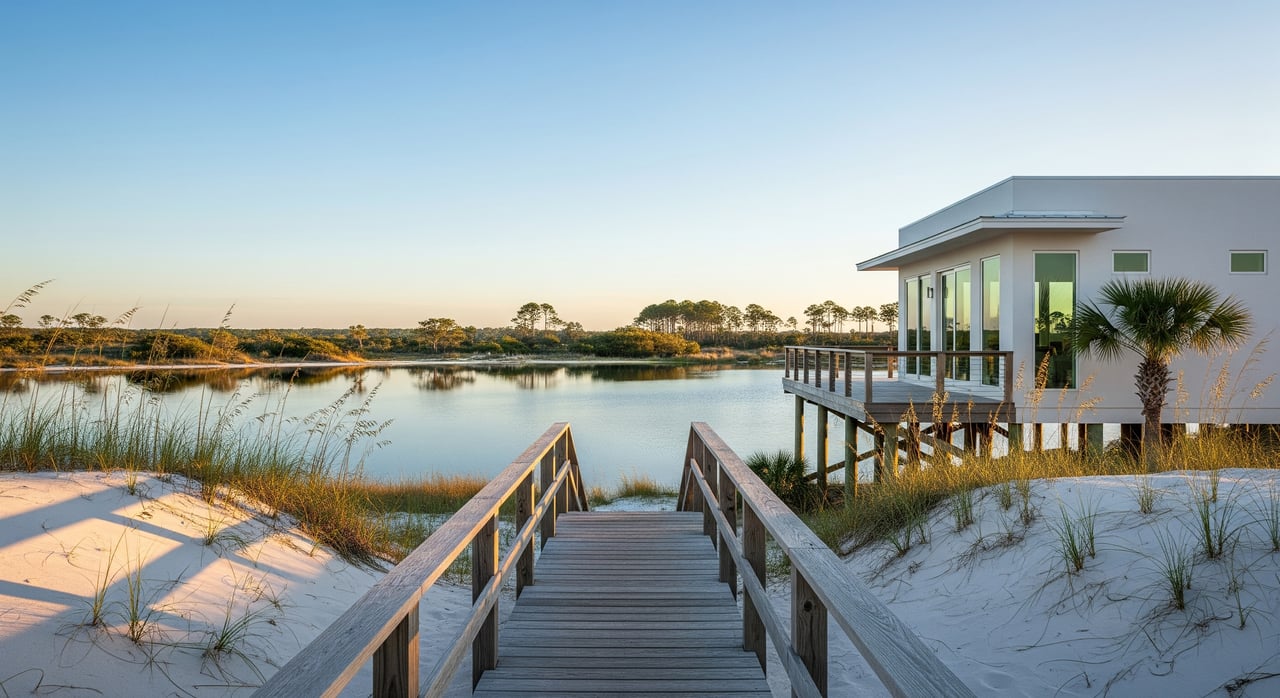
If you have fallen in love with the quiet beauty around Dune Allen, you have likely noticed the serene waters tucked just behind the dunes. These are coastal dune lakes, and they are part of what makes 30A living feel so special. If you are thinking about a home near one, you want to understand how they work, what they offer, and what to check before you buy.
In this guide, you will learn what coastal dune lakes are, why they are rare, how they shape daily life and recreation, and the practical steps to vet a lake-adjacent property with confidence. Let’s dive in.
What they are
Coastal dune lakes are shallow lakes that sit just behind the dunes and sometimes exchange water with the Gulf of Mexico through a temporary channel. Depending on rainfall and storms, they can shift from mostly fresh to brackish. The water levels, clarity, and salinity can change with the seasons and after major weather events.
These lakes form where a low-lying depression collects runoff and groundwater. A sand barrier separates the lake from the Gulf until high water or storm action opens a narrow connection. Over time, the dunes rebuild and close that channel. The result is a dynamic system with strong connections between land, freshwater, and nearshore marine habitats.
Why they’re rare
Coastal dune lakes need very specific conditions: sandy shorelines, low-lying basins just inland of the beach, and a system that can open and close a Gulf connection. You find examples in only a few regions worldwide. Walton County and the Florida Panhandle host some of the best-known U.S. examples, which adds to their conservation value and appeal.
Where they are near Dune Allen
Along Scenic Highway 30A in Walton County, multiple coastal dune lakes sit within and around communities like Dune Allen. Each lake varies in size, water dynamics, and public access. Ownership is often a blend of public and private shoreline, and access rules can differ from one segment to the next. That is why due diligence on a specific address is so important.
Lifestyle and recreation
Many owners and visitors enjoy calm-water activities on these lakes. You will often see:
- Kayaking and paddleboarding
- Shore fishing in designated areas
- Birdwatching and nature photography
- Quiet, non-motorized or low-wake boating where allowed
Because the water is typically calmer than the Gulf, the lakes can be a relaxing alternative on windy or high-surf days. After storms, the temporary connection to the Gulf may open, which can shift salinity and influence fishing and wildlife activity for a period of time.
Property pros and tradeoffs
Buying near a coastal dune lake offers lifestyle advantages along with some unique constraints.
Positives you may value:
- Scenic water views and a sense of privacy away from the surf
- Easy access to calm-water paddling and fishing
- A strong connection to local nature and seasonal wildlife
Considerations to plan for:
- Access is not automatic. A lakefront address does not guarantee the right to launch, fish, or build a dock.
- Water quality can vary with runoff and nutrient inputs, sometimes leading to vegetation growth or algal events.
- Regulations often limit shoreline alteration, dock construction, and vegetation removal.
- Flooding, storm surge, and elevated groundwater are real factors in these low-lying areas.
Rules to know
Use restrictions vary by lake and shoreline segment. Before you buy, confirm:
- Whether motors are allowed and what speed limits or boat sizes apply
- Local fishing rules and any temporary advisories
- Dock and shoreline permitting requirements at county and state levels
- Any conservation easements or HOA rules that limit use, landscaping, or access
When rules are in place, they usually aim to protect water quality, wildlife habitat, and shoreline stability.
Risks and insurance
Coastal dune lakes respond to weather and watershed changes. You should understand the main risk categories:
- Water quality and nuisance events. Nutrient inputs from septic systems, fertilizers, or stormwater can drive algal blooms or dense aquatic vegetation. Monitoring may occur in your community, but advisories can still happen.
- Flooding and storm surge. These are low-lying coastal environments where extreme rain, high groundwater, and surge can overlap. FEMA flood zones, elevation, and flood history can influence your insurance costs and lending requirements.
- Long-term change. Sea-level rise and more intense storms can affect how often the lake connects to the Gulf, how dunes rebuild, and how shorelines shift. Over decades, these changes can influence property conditions and infrastructure like septic systems and roads.
Buyer due diligence
Use this checklist to evaluate a specific lake-adjacent property near Dune Allen. The goal is to clarify rights, confirm condition, and budget for future needs.
Property and legal documentation:
- Deed and plat. Confirm whether the shoreline is private or public and whether you have riparian or littoral rights.
- Easements and access. Verify any public easements to the lake or Gulf and the presence of conservation easements.
- HOA documents. Review covenants, conditions, and restrictions, plus any lake-management rules.
Environmental and physical inspections:
- Water-quality reports. Request recent results if available, including nutrient indicators and any fish or algae advisories.
- Septic inspection. Pay special attention to older systems. Confirm any required upgrades or the option to connect to sewer.
- Elevation Certificate and flood-claim history. Understand true site elevation and past flood events.
- Shoreline condition. Review erosion history and prior permits for bulkheads, docks, or restoration.
Regulatory and practical checks:
- Permitting. Confirm county and state requirements for docks, seawalls, and any shoreline work.
- Boat and motor rules. Verify restrictions for the specific lake and season.
- Insurance. Ask for prior insurance history and obtain a current flood quote when possible.
Lifestyle and community factors:
- Public vs. private access. Identify where launches, parks, and private segments begin and end.
- Stewardship. Look for local monitoring programs or lake associations that support water quality.
- Seasonal nuisances. Ask about typical mosquito seasons, vegetation growth, or recent algal events.
Offer and planning tips
When you are ready to write an offer, consider adding protection and clarity.
- Contingencies. Include language for septic inspection and repairs, acceptable elevation or flood findings, and review of water-quality conditions.
- Future costs. Budget for potential septic upgrades, shoreline stabilization if permitted, higher insurance, and storm repairs.
- Long-term outlook. Ask how sea-level rise and storm patterns could affect shoreline positions, access, and infrastructure over the next 10 to 20 years.
Conservation and community value
Coastal dune lakes are more than a scenic backdrop. They support a mix of habitats and serve as feeding areas and nurseries for fish and birds. The small watersheds make them sensitive to change, so simple stewardship steps matter. Vegetated buffers, smart stormwater design, and limited shoreline hardening can protect both habitat and your view.
If you live near a lake, you can often join local efforts that monitor water quality and share best practices. Many owners find that active stewardship protects long-term property value and the experience that drew them to the area.
Work with a local expert
Buying near a coastal dune lake is different from a typical neighborhood purchase. You benefit from an agent who understands lake dynamics, access rights, flood and insurance factors, and permitting. You also want a partner who can coordinate inspections and documents if you are out of market.
With a boutique, senior-agent approach, you will get direct guidance on due diligence, insurance quotes, HOA and easement reviews, and the vendor network to move quickly. If you are exploring a second home, investment, or a new build near a lake, let’s talk about a plan that protects your lifestyle and your long-term value.
Ready to explore homes near Dune Allen’s coastal dune lakes? Reach out to Albert Baeza for a one-on-one consultation.
FAQs
What is a coastal dune lake near Dune Allen?
- It is a shallow lake just behind the dunes that sometimes connects to the Gulf through a temporary channel, shifting between fresh and brackish water depending on weather and tides.
Where are coastal dune lakes along 30A in Walton County?
- Several lakes sit along Scenic Highway 30A, including within and near Dune Allen, with a mix of public and private shoreline segments and varying access rules.
Can you use motorized boats on dune lakes in Dune Allen?
- Rules vary by lake and season; many areas limit motors or require low-wake operation, so you should verify specific restrictions before bringing a boat.
Do lakefront homeowners automatically have private water access?
- Not always; a lakefront address does not guarantee launch or dock rights, so confirm easements, riparian or littoral rights, and HOA rules in writing.
What flood and insurance factors should buyers check near dune lakes?
- Review the FEMA flood zone, obtain an Elevation Certificate, confirm past flood-claim history, and get a current flood-insurance quote tied to the property.
Are docks and shoreline changes easy to permit on dune lakes?
- Typically no; both county and state permits may apply, and conservation rules often limit shoreline alteration, so verify feasibility and timelines early.
How do storms affect coastal dune lakes around Dune Allen?
- Storms can open a temporary channel to the Gulf, changing salinity and water levels and sometimes influencing fishing, wildlife activity, and access for a period of time.